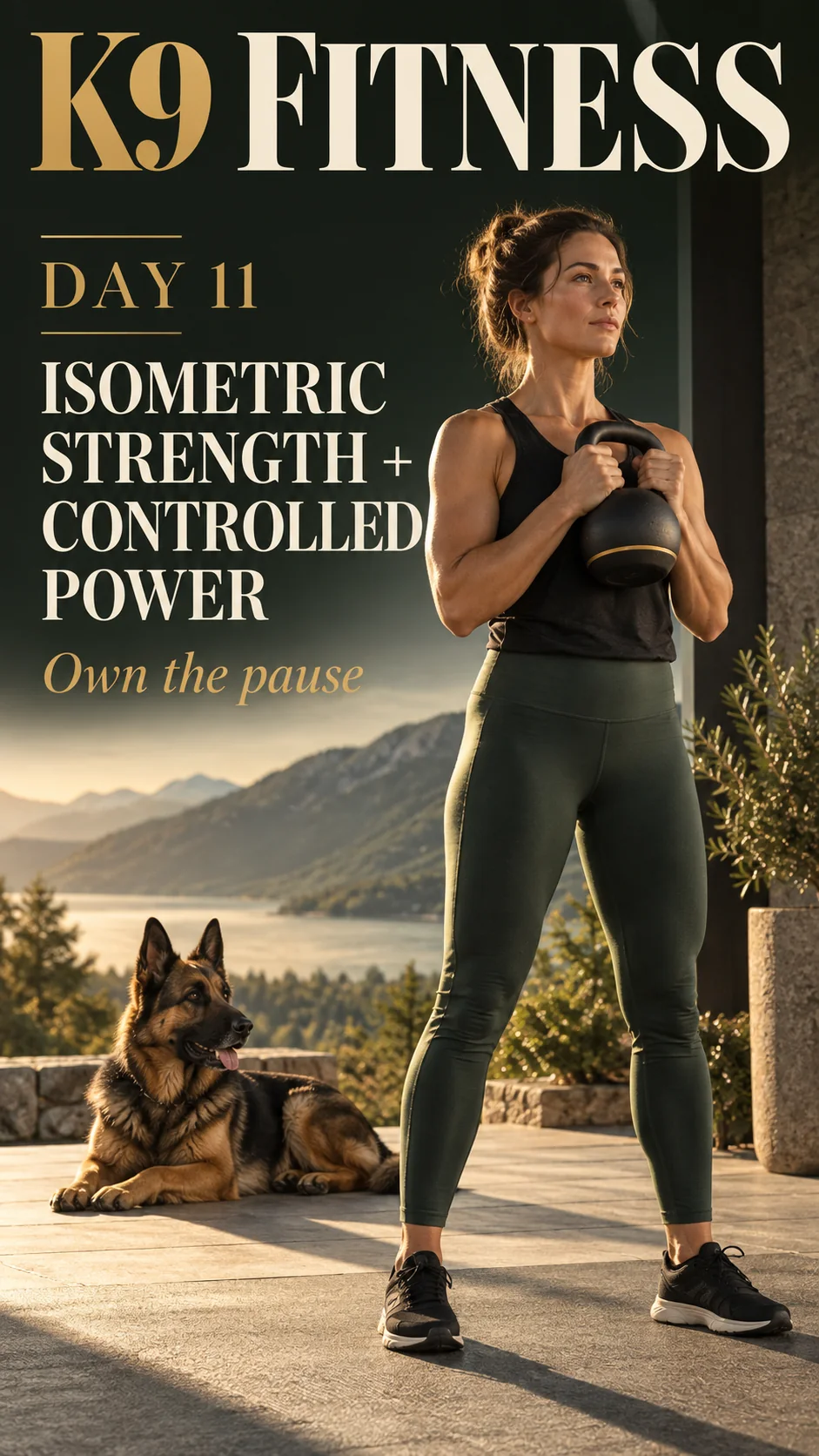
K9 FITNESS — DAY 11: Isometric Strength + Controlled Power
Own the Pause
A brief pause can reveal how much control you have over a movement. Today returns to the recovered Day 11 theme with a simpler, scalable session. The foundation is an intentional pause followed by a smooth return.
An isometric effort holds a position without visible joint movement. Here, pauses are short and comfortable. The word power does not require jumping or explosive lifting: beginners can stand with purposeful control while keeping the lowering phase slow. Leave advanced speed work until the basic pattern is established.
Today’s practice
Begin with 2–3 minutes of easy movement. Use the lowest suggested dose, keep effort comfortable, and rest between lessons whenever needed.
Pause chair squat or light goblet squat — 6 repetitions. Lower for about 2–3 seconds, pause briefly above the chair or at a comfortable depth, then stand.
Seated single-arm press — optional 6 per side. Use a light weight and comfortable range. A half-kneeling version is for those comfortable kneeling; substitute wall slides if overhead work is uncomfortable.
Supported split squat — 5 per side. Pause for one second in a shallow position, then return.
Bridge — 8 repetitions with a 2-second comfortable hold. Keep both feet grounded; single-leg work is optional only after strong bilateral control.
Light lateral raise — 6–8 repetitions below a comfortable shoulder height. Lift smoothly without shrugging or swinging.
Complete one or two rounds with 60–90 seconds rest. Finish with three controlled chair stands if still fresh. The earlier routine included upright rows and a larger power circuit; this adaptation reduces complexity and offers shoulder-friendly substitutions.
Canine partner routine
Use an easy recovery walk after the weights are put away. Practice a brief pause before moving on, rewarding calm attention. The dog should never be underneath you during squats or holding drills.
Match activity to your dog’s age, health and conditioning. Avoid hot conditions and hot pavement; stop for unusual fatigue or distress. Ask your vet about activity limits when needed.
Make it useful tomorrow
Did the pause make you choose a lighter weight? That is useful feedback, not a setback.
Keep a simple record: movement version, repetitions, effort and next-day response. You do not need a dog or equipment to belong in this course.
Before you train
This is general fitness education, not individualized rehabilitation. Choose pain-free movements; stop for sharp pain, dizziness, chest pain or unusual shortness of breath. If an injury or medical condition affects exercise, use advice from your clinician. Take recovery days between demanding sessions.
Sources and further reading
The sources below provide general background, not validation of this exact workout prescription.
Core training background — Mayo Clinic Health System
General activity guidance — CDC