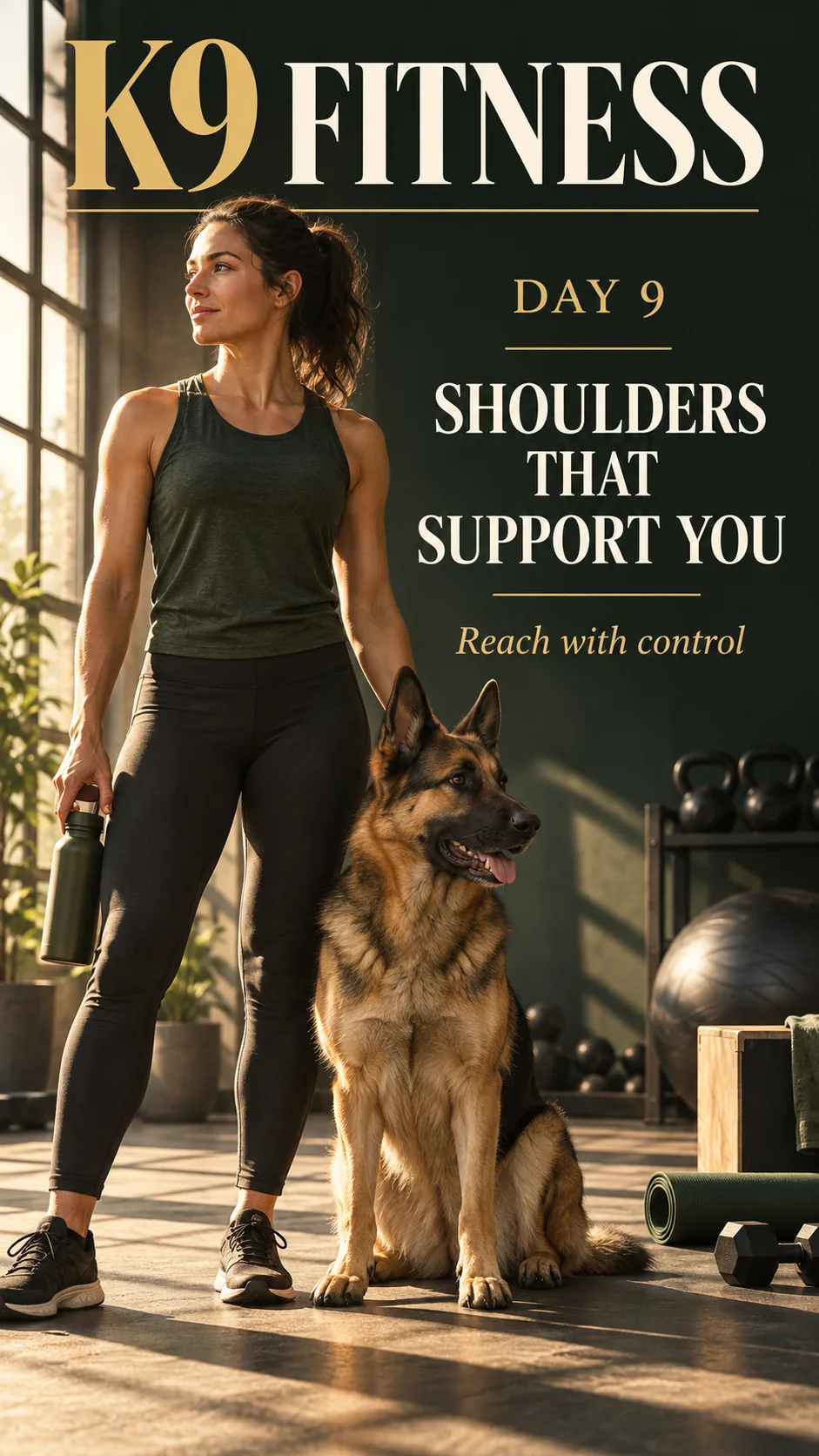
K9 FITNESS — DAY 9: Shoulders That Support You
Reach With Control
Reaching into a cabinet, lifting a bag and handling a leash all involve your shoulders. Today pairs gentle shoulder work with the trunk skills you have already practiced. The goal is comfortable movement with a workload you can repeat.
Watch what happens at your ribs when you raise your arms. If you have to lean backward to reach higher, shorten the reach or choose a lighter task. Comfortable shoulder motion varies between people; this lesson does not require everyone to press overhead.
Today’s practice
Begin with 2–3 minutes of easy movement. Use the lowest suggested dose, keep effort comfortable, and rest between lessons whenever needed.
Wall slide — 6 repetitions. Face the wall and slide hands upward through a comfortable range. Avoid forcing your ribs forward.
Counter push-up — 6–8 repetitions. Use a fixed counter, bend elbows with control and press away.
Supported light row — 8 per side. Support one hand on a sturdy surface and draw a light weight toward your side without twisting.
Unweighted scaption raise — 6 repetitions. Raise arms slightly forward of your sides only to a comfortable height; start below shoulder level.
Seated heel march — 6 per side. Sit tall and lift one heel or foot a little without leaning backward.
Use one or two rounds with 45–90 seconds of rest. Keep shoulder discomfort out of the session. Choose an easy walk if the previous strength lesson left you tired; return after recovery.
Canine partner routine
Practice rewarding a loose leash during a short walk. Stop and reset calmly when pulling starts; do not use the dog to create shoulder resistance.
Match activity to your dog’s age, health and conditioning. Avoid hot conditions and hot pavement; stop for unusual fatigue or distress. Ask your vet about activity limits when needed.
Make it useful tomorrow
Which reach felt smooth without leaning backward? That is your working range for now.
Keep a simple record: movement version, repetitions, effort and next-day response. You do not need a dog or equipment to belong in this course.
Before you train
This is general fitness education, not individualized rehabilitation. Choose pain-free movements; stop for sharp pain, dizziness, chest pain or unusual shortness of breath. If an injury or medical condition affects exercise, use advice from your clinician. Take recovery days between demanding sessions.
Sources and further reading
The sources below provide general background, not validation of this exact workout prescription.
Core training background — Mayo Clinic Health System
General activity guidance — CDC