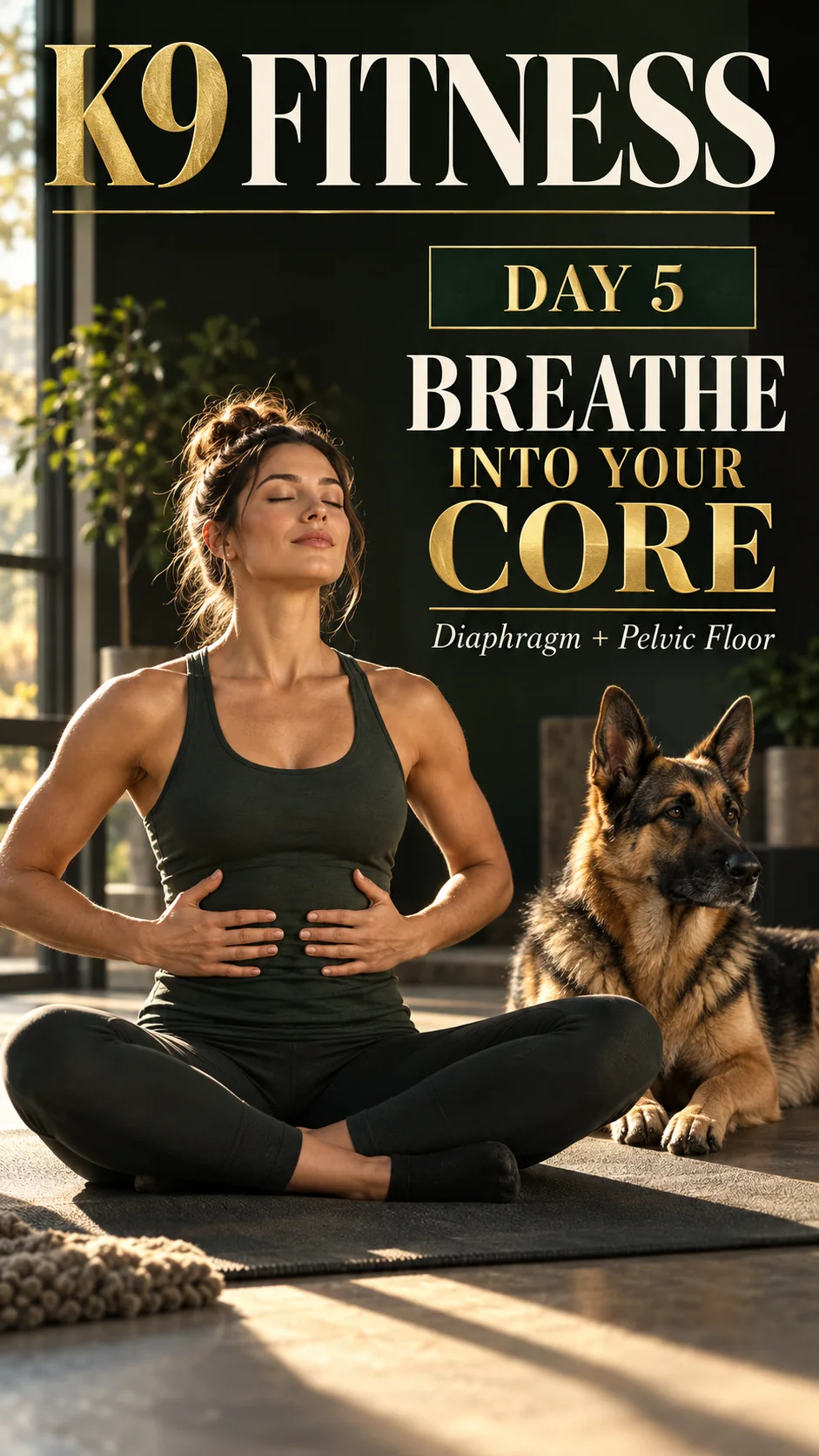
K9 FITNESS — DAY 5: Breathe Into Your Core
Diaphragm + Pelvic Floor
Today gives you room to slow down. Breathing is part of training, not a break from it. A short, comfortable session can help you recognize when you are holding your breath or tensing muscles more than the task requires.
The diaphragm and pelvic floor participate in breathing and pressure management along with the abdominal wall. Coordination includes relaxing as well as contracting. This is not a prescription to squeeze the pelvic floor constantly. Pelvic pain, pressure or leakage calls for individualized guidance from a qualified clinician.
Today’s practice
Begin with 2–3 minutes of easy movement. Use the lowest suggested dose, keep effort comfortable, and rest between lessons whenever needed.
Supported breathing — 5 comfortable breaths. Lie with knees bent or sit supported. Notice the lower ribs expand without forcing a very deep inhale.
Exhale with a gentle brace — 5 breaths. On a relaxed exhale, lightly firm your abdomen, then allow it to soften again.
Heel slide — 5 per side. Exhale during a short slide away, inhale as you return; shorten the movement as needed.
Easy bridge — 6 repetitions. Breathe out as you lift a little, then lower with control. Keep effort light.
Standing reset — 5 breaths. Stand comfortably with soft knees and relaxed shoulders. Let breathing return to normal.
One round is enough. Avoid long breath holds or pushing down. If lying flat aggravates reflux or breathing, use a comfortable supported seated position and skip the floor movements.
Canine partner routine
Choose five minutes of quiet companionship or a gentle sniff break. Reward settling on a mat. Your dog’s calm presence is the activity today; no strenuous exercise is required.
Match activity to your dog’s age, health and conditioning. Avoid hot conditions and hot pavement; stop for unusual fatigue or distress. Ask your vet about activity limits when needed.
Make it useful tomorrow
Where did you notice unnecessary tension—in your jaw, shoulders or abdomen? Practice releasing that tension between repetitions.
Keep a simple record: movement version, repetitions, effort and next-day response. You do not need a dog or equipment to belong in this course.
Before you train
This is general fitness education, not individualized rehabilitation. Choose pain-free movements; stop for sharp pain, dizziness, chest pain or unusual shortness of breath. If an injury or medical condition affects exercise, use advice from your clinician. Take recovery days between demanding sessions.
Sources and further reading
The sources below provide general background, not validation of this exact workout prescription.
Core training background — Mayo Clinic Health System
General activity guidance — CDC